Securing long-term structural integrity requires an exacting pest control service in Salt Lake City tailored to the unique geological conditions of the Wasatch Front. Subterranean moisture gradients, legacy brick foundations, and rapid seasonal temperature drops demand engineering-grade barriers rather than superficial chemical sprays.
No forms — call now for a fast, no-pressure quote.
📞 Call (385) 478-4246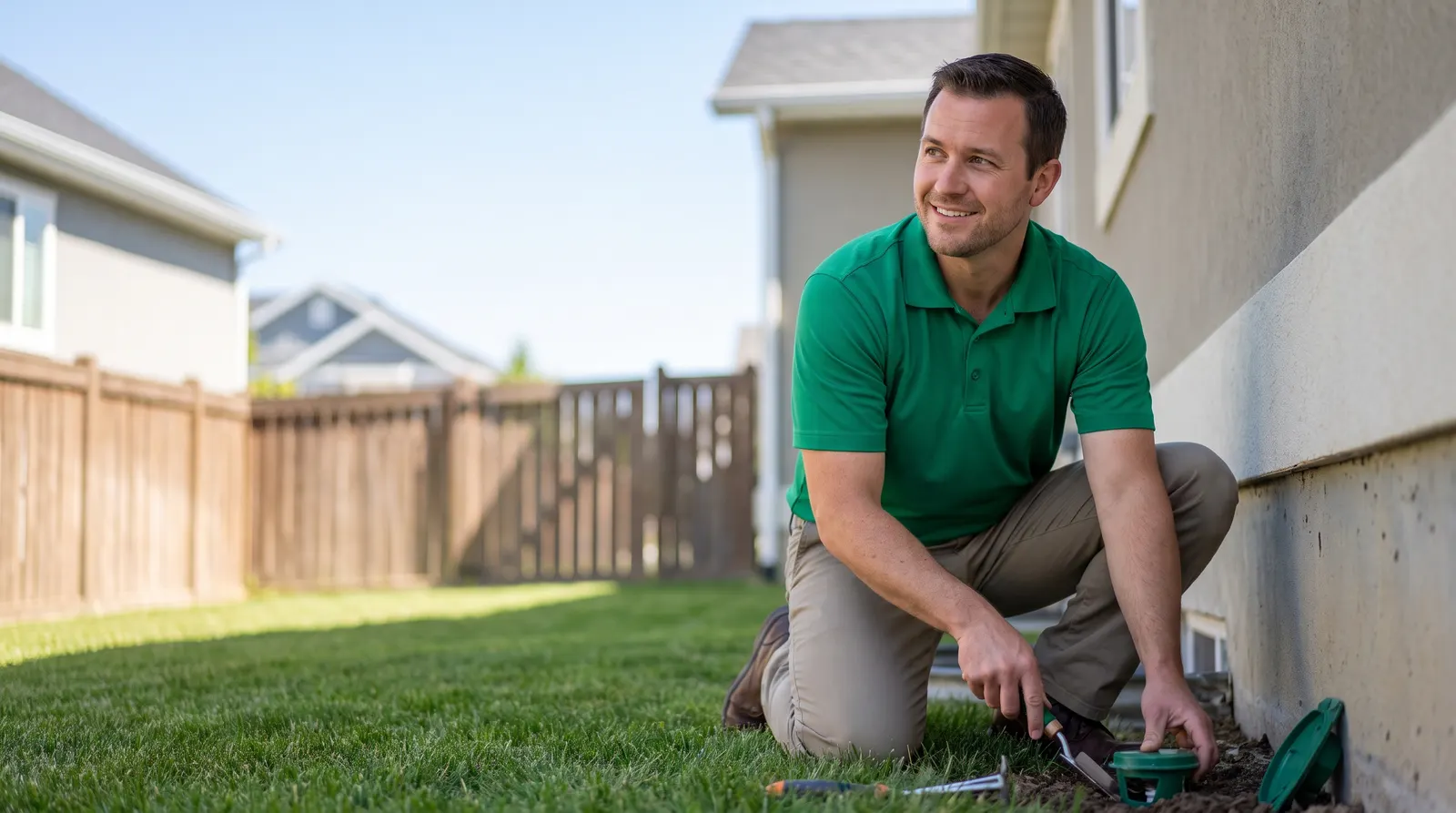
A professional pest control service in Salt Lake City is an engineering-focused environmental management contractor that identifies, intercepts, and systematically eliminates wood-destroying organisms, invasive arthropods, and structure-invading rodents from residential and commercial foundations.
Every service reflects the same meticulous attention to detail — whether it's a single job or a larger pest control service project across Salt Lake City.
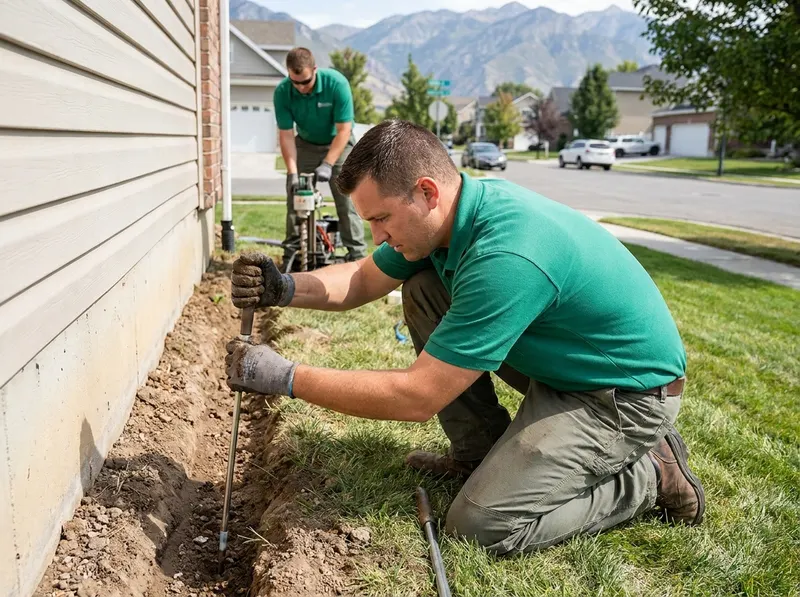
Subterranean termite defense requires precision trenching and soil rod injection around the structural foundation perimeter to intercept foraging subterranean colonies. Technicians trench continuous channels along exterior foundation footings and utilize heavy-duty hydraulic injection rods to deliver non-repellent liquid termiticides down to the top of structural footings. Where concrete patios, driveways, garage aprons, and walkways abut load-bearing walls, applicators drill precision vertical access holes spaced twelve inches apart through the slab to establish an unbroken subterranean defense zone. The non-repellent chemical formulation remains completely undetectable to foraging worker termites, allowing them to pass freely through the treated soil matrix, coat their cuticles with the active toxicant, and transfer the active ingredient throughout the subterranean colony via mutual grooming and food sharing. This horizontal transfer chain systematically neutralizes reproductive queens, secondary reproductives, and soldier castes, halting cellulose consumption within structural sill plates, subfloors, and wall studs. All drilled slab access holes are professionally sealed with non-shrink hydraulic cement matched to the surrounding masonry texture to restore surface integrity.
View details →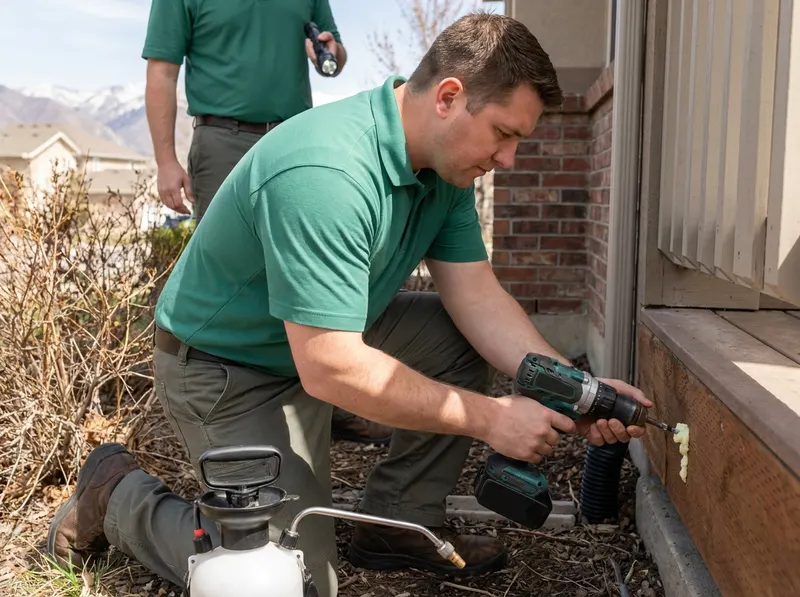
Carpenter ant infestations along the Wasatch Front present significant structural risks as parent and satellite colonies excavate expansive nesting galleries through structural framing timbers, window headers, and roof trusses. Unlike termites, carpenter ants do not consume wood cellulose for nutritional value; instead, they hollow out damp, compromised softwood framing to establish smooth nesting cavities, discharging characteristic wood shavings known as frass through microscopic kick-out holes. Remediation protocols begin with acoustic and thermal diagnostic mapping to locate internal wall voids containing satellite nests without executing unnecessary drywall demolition. Specialists then apply targeted non-repellent micro-encapsulated formulations and slow-acting biological transfer baits along exterior foundation perimeters, roofline transition points, and plumbing pipe chases. Foraging worker ants carry the microscopic active ingredients directly back to parent colonies situated in exterior landscape timbers or tree stumps, eliminating the brood and nesting queens. Concurrently, technicians locate exterior moisture anomalies, such as leaking gutter downspouts or unsealed sill plates, providing property owners with prescriptive physical modifications to prevent re-infestation.
View details →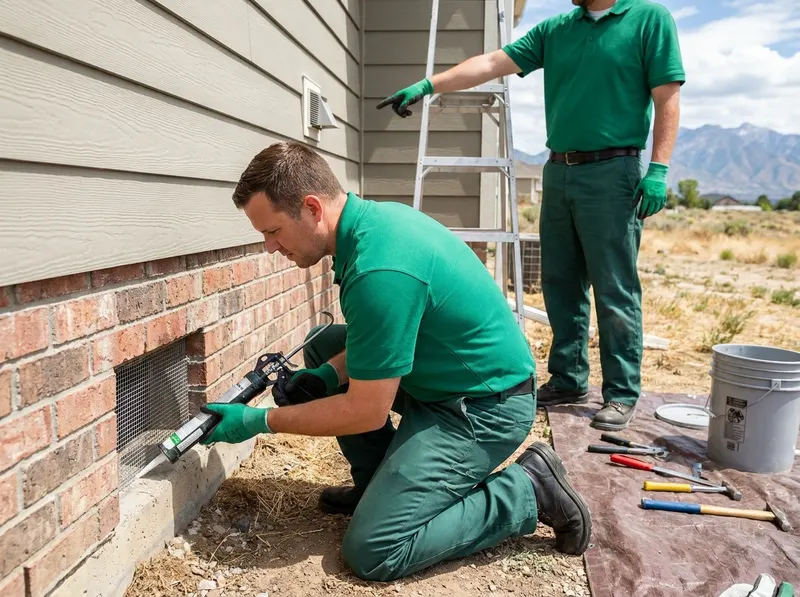
Rodent structural exclusion provides complete envelope defense against deer mice, house mice, and roof rats seeking thermal harborage inside building interiors during cold Wasatch winters. A successful containment program relies entirely on mechanical structural exclusion rather than continuous internal rodenticide placement, which risks secondary poisoning and dead animals decomposing inside inaccessible wall cavities. Technicians perform an exhaustive physical inspection of the entire exterior perimeter, identifying gaps as small as one-quarter inch around foundation weep holes, crawl space access hatches, air conditioning line sets, gas meters, plumbing penetrations, and roof eaves. All identified breach points are permanently sealed using heavy-gauge galvanized steel hardware cloth, stainless steel micro-mesh, structural metal flashing, and industrial polyurethane elastomeric sealants that resist gnawing. Once the building envelope is mechanically impenetrable, specialists place strategically mapped mechanical snap traps and multi-catch containment stations inside attics, drop ceilings, and crawl spaces to systematically remove trapped interior populations until zero activity is confirmed via digital monitoring.
View details →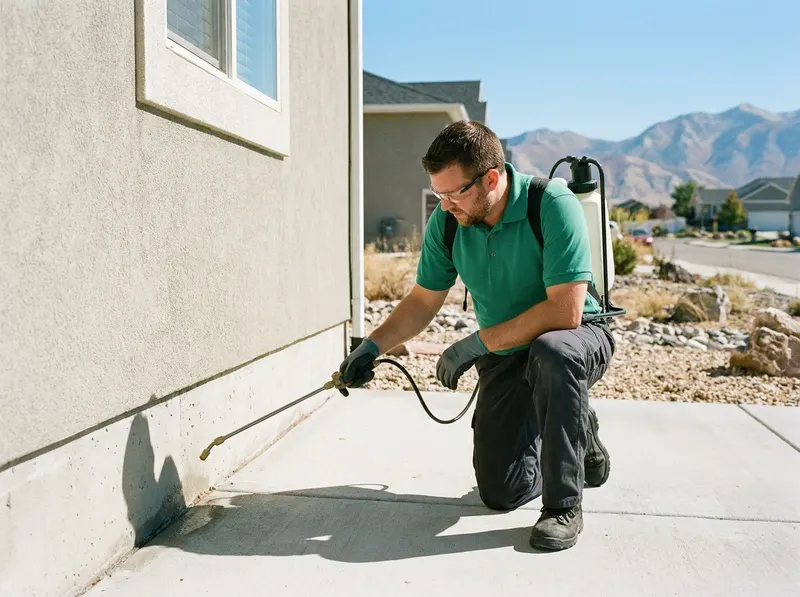
Foundation perimeter insect defense creates a clinical, multi-tiered chemical and physical barrier around the exterior perimeter to intercept migrating arthropods before they penetrate living spaces. This protocol targets persistent seasonal invaders common to Northern Utah, including boxelder bugs, hobo spiders, black widows, oriental cockroaches, and pavement ants. Technicians apply a wide-band residual suspension concentrate along the bottom three feet of exterior foundation walls and outward across a two-foot band of adjacent soil, gravel, or turf. Particular attention is directed toward high-risk microclimates, including subterranean window wells, exterior basement stairwells, crawl space vents, threshold thresholds, and expansion joints. In addition to liquid residual barriers, technicians disperse water-resistant synthetic pyrethroid granules into surrounding landscape beds and mulch zones, which activate with exterior irrigation to establish an extended protective buffer. Regular application schedules maintain chemical residual stability against intense ultraviolet radiation, alkaline soil breakdown, and heavy precipitation runoff.
View details →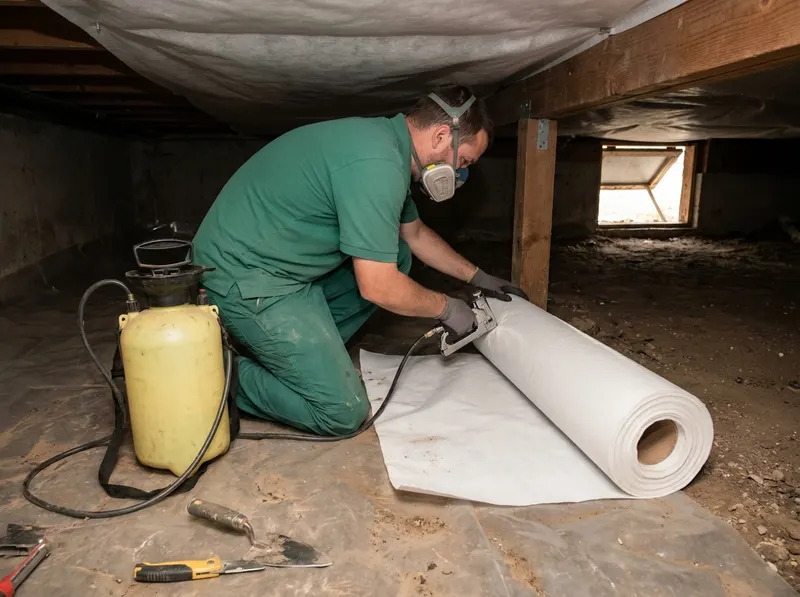
Unfinished earthen crawl spaces create high-humidity structural environments that foster wood-destroying insect activity, wood-rot fungus, and indoor air contamination throughout upper living levels. Crawl space remediation protocols begin with a comprehensive mechanical inspection of structural subflooring, floor joists, beam pockets, and support piers to evaluate timber moisture levels using calibrated electronic pin-type moisture meters. Exposed structural framing timbers exhibiting elevated moisture content receive deep-penetrating disodium octaborate tetrahydrate (borate) liquid treatments, which diffuse deep into the wood cellular matrix to impart permanent, mineral-based protection against subterranean termites, powderpost beetles, and fungal decay organisms. Technicians then treat the entire exposed earth floor with a continuous residual termiticide application before installing heavy-duty, multi-ply vapor retarder membranes across the soil bed. Sealing ground-level moisture pathways lowers relative humidity, neutralizes subterranean insect entry routes, and stabilizes foundation structural framing across all seasons.
View details →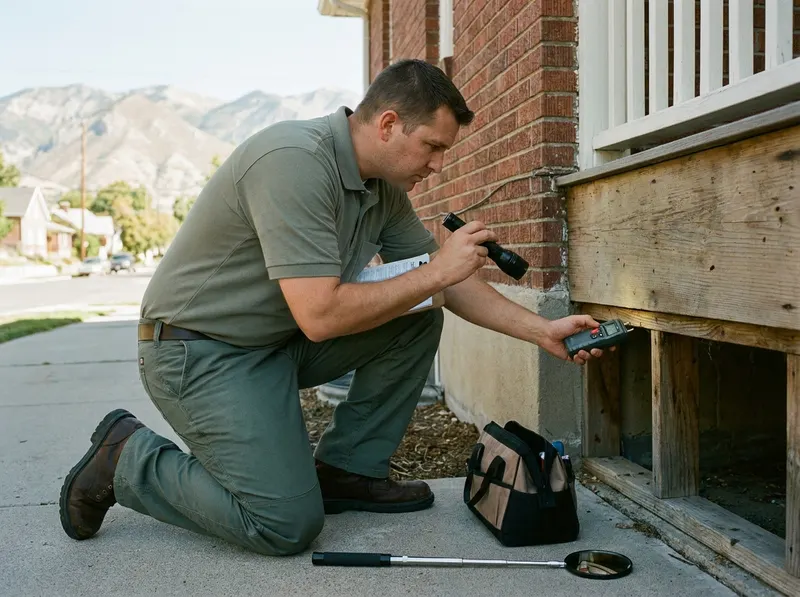
Real estate transactions across Salt Lake County routinely mandate comprehensive Wood-Destroying Insect (WDI) inspection reports to satisfy mortgage underwriting, VA/FHA loan stipulations, and buyer contingency requirements. State-certified inspection specialists perform systematic, rigorous physical evaluations of the entire accessible structural envelope, including basement stem walls, crawl spaces, attic roof trusses, exterior siding transitions, attached wooden decks, and structural garage slabs. Technicians inspect for active insect infestations, prior historical damage, visual evidence of past chemical treatments, and structural conducive conditions such as direct wood-to-earth contact, faulty grading, or plumbing leaks near structural timbers. All findings are compiled into official NPMA-33 inspection reporting forms, complete with detailed physical diagrams, annotated high-resolution photographs, and clear technical descriptions of observed evidence. If active infestations or structural deficiencies are identified, the report delivers an objective, engineering-based remediation blueprint and cost estimate to facilitate rapid escrow resolution.
View details →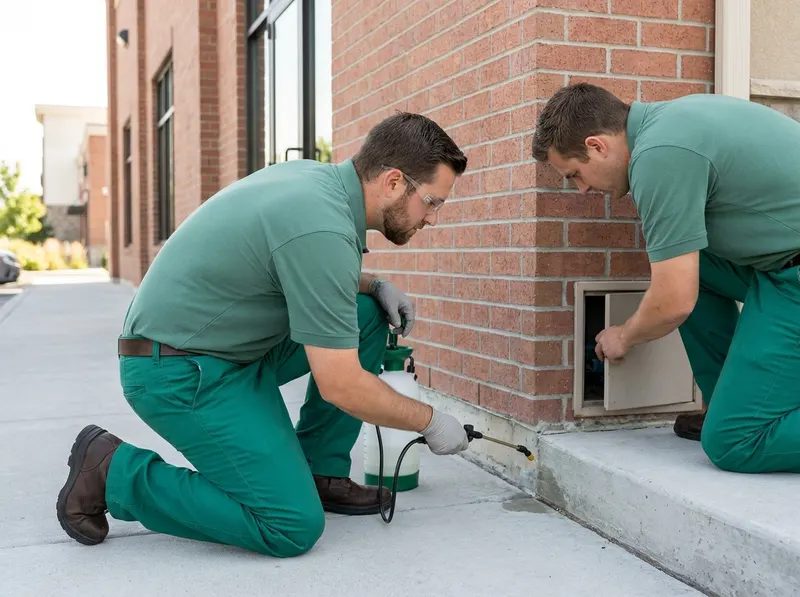
Commercial industrial spaces, logistics distribution centers, food processing plants, and multi-family residential communities require sophisticated integrated pest management protocols that strictly adhere to federal, state, and local health regulations. Commercial programs focus on proactive structural containment, environmental sanitation audits, and mechanical interception matrices designed to prevent pest entry without disrupting business operations. Technicians establish exterior perimeter tamper-resistant bait stations and electronic monitoring traps spaced systematically along exterior fence lines and loading dock aprons to intercept rodent populations before they reach warehouse overhead doors. Interior monitoring networks utilize insect light traps, pheromone monitoring stations, and barcode-scanned trap checkpoints to capture detailed pest migration data. Facility managers receive comprehensive digital logbooks containing chemical application manifests, safety data sheets, trend analysis charts, and corrective physical action plans for dock seals, pipe penetrations, and waste disposal enclosures.
View details →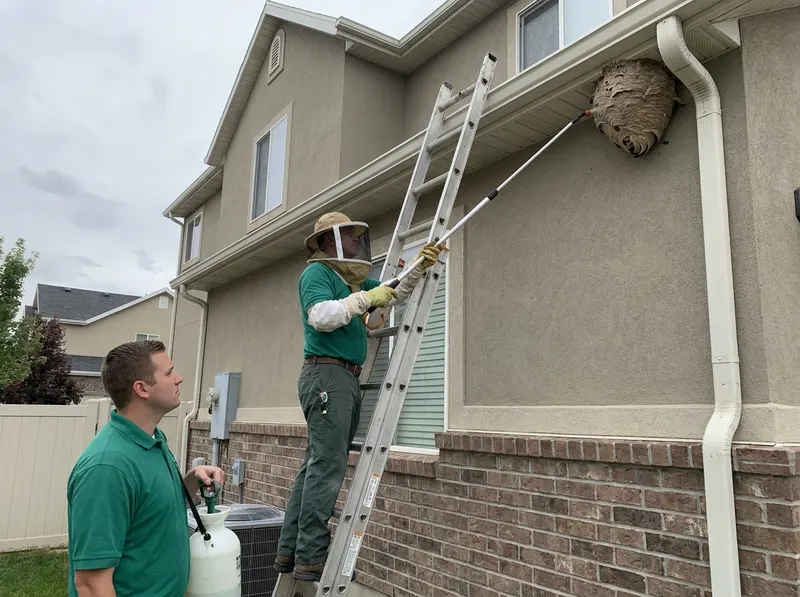
Aggressive stinging insect colonies, including aerial yellowjackets, bald-faced hornets, paper wasps, and subterranean ground-nesting yellowjackets, establish hazardous nesting sites in close proximity to residential entries and commercial walkways. Eradication begins with species-specific identification and flight-path mapping to locate concealed nesting voids inside exterior soffits, roof overhangs, chimney chases, wall cavities, and hollow fence posts. Technicians deploy specialized micro-injection equipment and pressurized dry aerosol delivery systems to inject fast-acting knockdown agents directly into the central nesting core, neutralizing the colony within minutes. Once all worker activity has ceased, technicians mechanically excise the nesting structure and scrape away residual attachment points to prevent secondary scavenging by carpet beetles or dermestid pests. All structural void entry gaps are chemically dusted with long-lasting residual repellent powders and mechanically sealed to prevent newly emerging queens from establishing future colonies in the identical wall cavity.
View details →A professional pest control service in Salt Lake City is an engineering-focused environmental management contractor that identifies, intercepts, and systematically eliminates wood-destroying organisms, invasive arthropods, and structure-invading rodents from residential and commercial foundations.
You get a firm, itemized quote for your pest control service before any work begins — no surprises, no pressure.
Careful prep, tidy work, and a full cleanup when we are done. We treat your home and belongings like our own.
The same trusted, background-checked team from the first call to the final check.
If you detect localized frass, mud shelter tubes along stem walls, or swarming activity near sub-slab plumbing lines, choose a targeted subterranean liquid barrier installation with perimeter trenching. If your primary objective is purchasing real estate, refinancing, or resolving lender contingency inspection demands near historic masonry, choose a formal wood-destroying insect clearance inspection with certified structural documentation. If you are experiencing seasonal insect activity along baseboards, entry thresholds, and window wells without visible wood damage, select an exterior residual perimeter defense. The trade-off between these protocols involves upfront diagnostic depth, installation time, and invasive physical barrier work versus broad, non-structural maintenance. Specialized subterranean termiticide barriers involve precision hydraulic injection along the entire foundation footprint to protect load-bearing framing for up to a decade, whereas standard perimeter spray applications require recurring quarterly replenishment to manage surface-foraging pests without penetrating deep subterranean nesting zones.
Every project gets a firm, written price after a free on-site visit. Ranges below for orientation.
Tell us about your pest control service job and we'll send a clear, written quote — usually the same day. Or just call and talk to a real Salt Lake City pro.

Properties situated throughout Salt Lake City face distinct environmental and structural pest pressures driven by the complex geography of the Salt Lake Valley and the Wasatch Mountain Range. The steep elevation transitions from the Wasatch Fault benches down to the low-lying Jordan River basin create significant soil moisture and drainage gradients. In established, historic neighborhoods such as The Avenues, Capitol Hill, and Harvard-Yale, homes frequently feature unreinforced brick masonry, fieldstone foundations, and unvented sandstone crawl spaces. These century-old structural assemblies possess soft, weathered mortar beds and direct wood-to-earth contacts that allow subterranean termites (Reticulitermes hesperus) and carpenter ants (Camponotus vicinus) unobstructed subterranean entry directly into load-bearing floor joists and sill plates. Furthermore, the alkaline chemistry of native Salt Lake County clay soils requires specialized chemical selection; generic termiticides can degrade rapidly or bind prematurely to surface particles, preventing the active compound from reaching proper foundation depth. In foothill areas surrounding Federal Heights, Red Butte Garden, and the University of Utah, cold autumn air drainage off mountain canyons triggers severe seasonal rodent migrations, driving deer mice and roof rats out of mountain scrub directly into residential attics and foundation voids. Effective structural defense in Salt Lake City requires calibrated barrier chemistry, mechanical envelope hardening, and an exact understanding of local architectural framing styles.
 Velqora Termite Management