Properties along the East Bench, from historic brick homes in Yalecrest and Federal Heights to older bungalows near Liberty Park and Sugar House, face seasonal rodent migration each autumn when temperatures drop along…
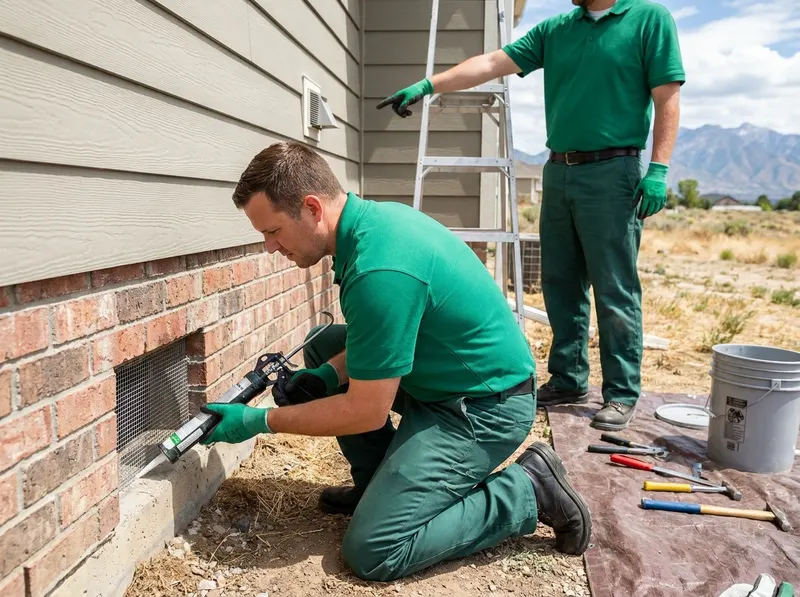
Properties along the East Bench, from historic brick homes in Yalecrest and Federal Heights to older bungalows near Liberty Park and Sugar House, face seasonal rodent migration each autumn when temperatures drop along the Wasatch Range. Subterranean burrowers like Norway rats and agile climbers like deer mice exploit architectural gaps where stone foundations meet mudsills, uncapped chimney flues near Capitol Hill, and aging crawlspace vents in the Ballpark and Glendale neighborhoods. Standard chemical rodenticide treatments only address active foragers inside the living space while leaving the exterior entry paths wide open, guaranteeing re-infestation season after season.
Rodent structural exclusion treats pest ingress as an architectural failure rather than an ongoing chemical management issue. Technicians systematically trace foundation perimeters, masonry weep holes, HVAC conduit entries, and soffit tie-ins near the University of Utah and East Central corridors. Every gap measuring a quarter-inch or wider is permanently closed using 19-gauge galvanized wire mesh, stainless steel escutcheon plates, and non-toxic elastomeric polymers that rodents cannot chew through. The trade-off of structural exclusion is an upfront mechanical investment compared to cheap bait boxes, but it provides continuous, poison-free structural defense that protects interior wiring, insulation, and framing without introducing secondary poisoning risks to local pets or wildlife.
Every job gets a firm, written price after a free on-site visit.
Tell us about your rodent structural exclusion and sealing job in Salt Lake City and we'll send a clear, written quote — usually the same day.
 Velqora Termite Management