Older residential architecture across Sugar House, Liberty Wells, and The Avenues often features unencapsulated crawl spaces with bare earth substrate. Subterranean termites require continuous ambient moisture to…
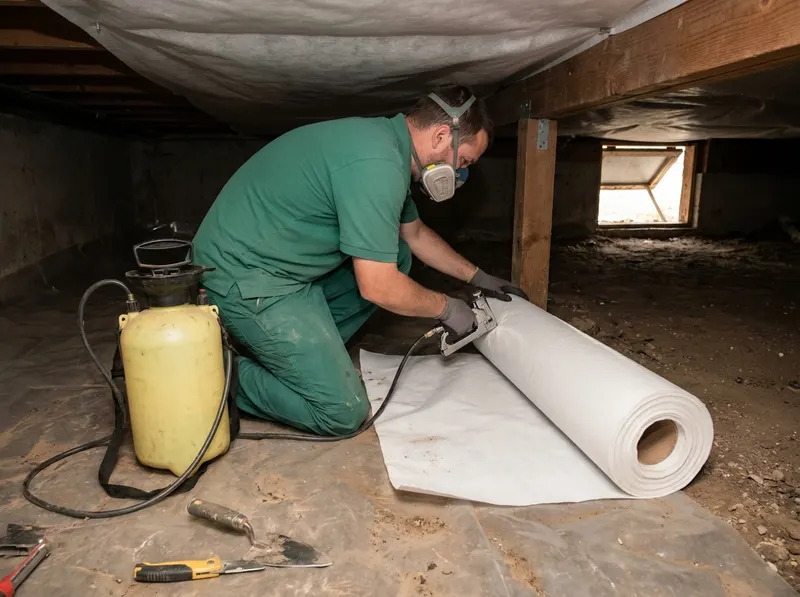
Older residential architecture across Sugar House, Liberty Wells, and The Avenues often features unencapsulated crawl spaces with bare earth substrate. Subterranean termites require continuous ambient moisture to survive and construct exploratory mud tubes toward load-bearing sills and floor joists. When spring snowmelt from the Wasatch Range filters through urban soil profiles, unsealed crawl spaces accumulate elevated relative humidity. Installing a heavy-gauge poly vapor retarder over leveled earth mechanically blocks rising ground vapor, while clinical soil treatments along foundation footings neutralize termite foraging paths before workers reach untreated wooden substructures.
Property owners in low-elevation drainage zones like Rose Park, Glendale, and the Ballpark neighborhood frequently face persistent subfloor dampness alongside clay soil shifting. While a simple dehumidifier handles ambient air dampness temporarily, it fails to halt liquid soil evaporation or block subterranean termite movement. Crawl space soil and moisture barrier treatment delivers a dual physical and chemical defense mechanism: it permanently seals out ground-level moisture release and impregnates the perimeter soil with termiticide to halt silent structural colonization beneath high-equity Wasatch Front homes.
Every job gets a firm, written price after a free on-site visit.
Tell us about your crawl space soil and moisture barrier treatment job in Salt Lake City and we'll send a clear, written quote — usually the same day.
 Velqora Termite Management