Foundation perimeter insect defense prioritizes structural envelope protection over generic interior chemical applications. Standard interior spraying addresses surface foraging insects only after structural…
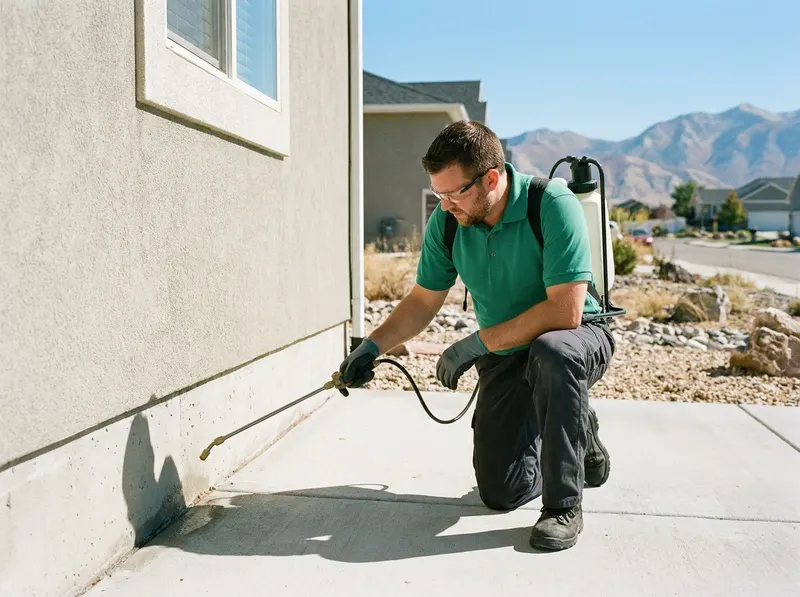
Foundation perimeter insect defense prioritizes structural envelope protection over generic interior chemical applications. Standard interior spraying addresses surface foraging insects only after structural containment fails, whereas engineering an exterior sub-surface barrier arrests subterranean colonies directly at the soil interface. For historic properties featuring unreinforced stone or brick masonry in The Avenues and Capitol Hill, sub-slab rodding and narrow perimeter trenching insulate porous mortar lines where subterranean pests exploit moisture gaps.
Soil composition across Salt Lake County dictates application depth and pressure. Along the Wasatch Bench in Federal Heights and Yalecrest, coarse gravelly soils allow chemical treatments to disperse rapidly, requiring precise calibration to ensure binding at structural footing levels. Conversely, valley neighborhoods including Liberty Wells, Ballpark, and Glendale feature dense clay loam that holds moisture against concrete slabs, creating high-pressure insect corridors near foundation vents and garden borders. Applying a non-repellent defense zone ensures foraging pests unknowingly transfer the barrier material throughout subterranean colonies.
Homeowners must balance mechanical trenching requirements against unmonitored structural deterioration behind siding, stucco, and brick veneers. While broad-spectrum topical sprays degrade rapidly under high-altitude summer sun in northern Utah, subterranean barrier treatments remain protected below the soil surface, providing consistent containment against concealed entry points.
Every job gets a firm, written price after a free on-site visit.
Tell us about your foundation perimeter insect defense job in Salt Lake City and we'll send a clear, written quote — usually the same day.
 Velqora Termite Management